

DIAL*A*FRIEND
CHEF IAN ROBINSON of RVR

I’m sort of a late bloomer. For someone who’s been surrounded by incredible food for her entire adult life, the prospect of actually cooking that food always seemed bleak. Then something happened. I’m not saying I’m a changed woman, but something did happen.
Effing bone broth happened. I love it, I crave it, I …. enjoy making it? OOF.
So I did what I always do, I started asking around, to people far more seasoned than I: How do you do it?
Well! It turns out people’s personal bone-broth methodology is, well… personal. And really interesting.
So here’s my latest obsession, which I’m entitling “DIAL A FRIEND.”
WELCOME!
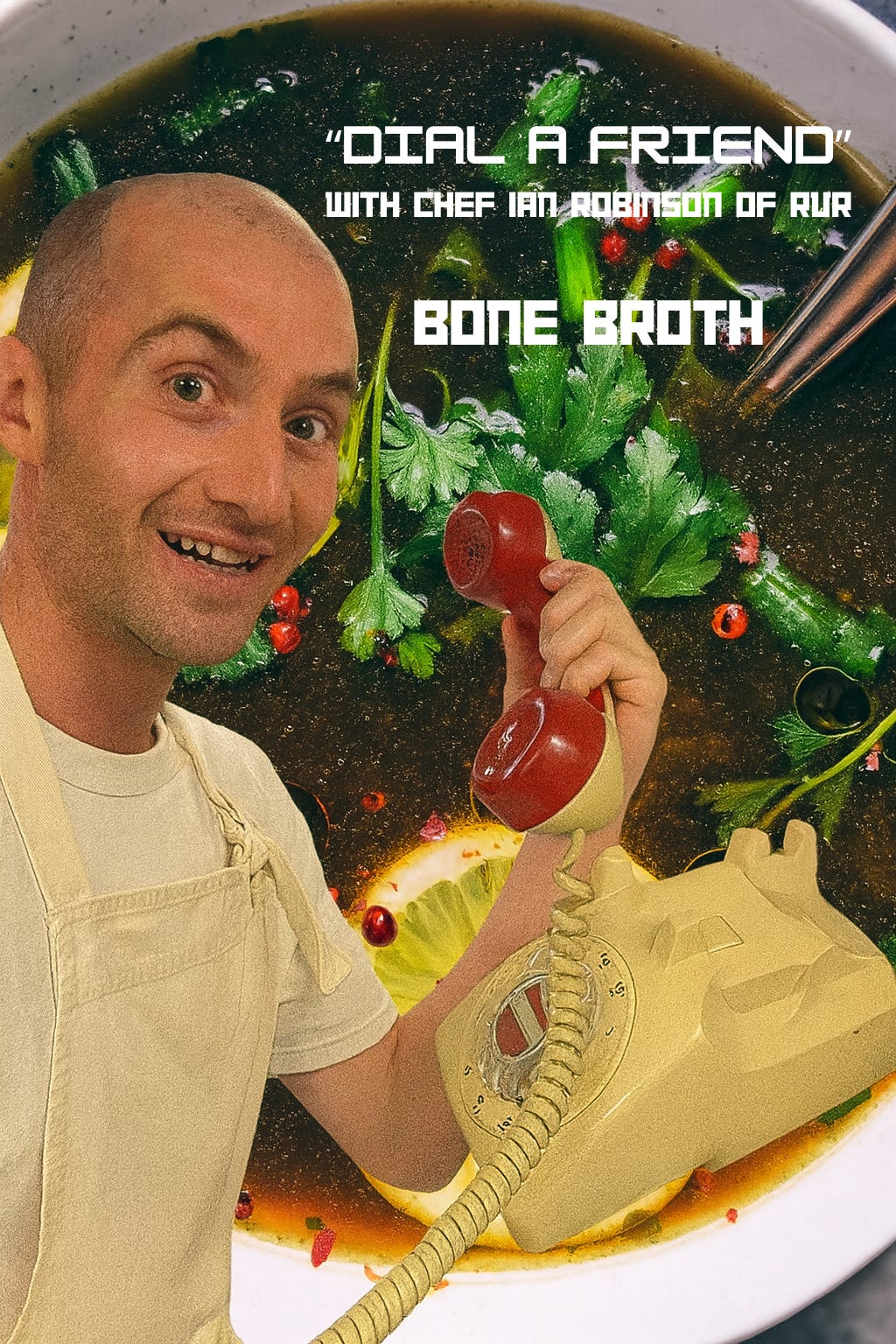
The concept for this series was sparked during one of my casual barrages of questions aimed at Chef Ian Robinson. Ian is the co-chef/owner of the insanely delicious RVR and one of my favorite people to talk food with. He’s exactly who he is—both as a human and as a chef—and I find it incredibly calming and fascinating to be around him. Get ready, this one is fun!
Q: Tell me about your bone broth. Let’s start at the beginning: chicken, beef, pork… what’s your move?
A: Chicken. Always. I start by finding the best whole chicken I can, usually from the farmers’ market. I buy the whole bird because it’s the most efficient—no waste. I visualize what I’ll be cooking for the week and break the chicken down myself: breasts off, legs off, leaving the back fairly meaty because it adds great flavor.
Q: So no separate bones—you’re a whole-bird purist.
A: Right. Whole-animal is the best way for me.
When I get the chicken home, I dry it in the fridge for a day or two. It comes in a wet bag, so I pat it dry, then salt it with a good salt—not just kosher, but something like a gray salt or Maldon. It lightly seasons and preserves the bird.
Once dried and salted, I remove the pieces (breasts and legs) and keep them individually salted in the fridge for roasting or poaching later. Then I blanch the remaining bones because I prefer a very clean stock. I’m not a huge meat-eater, so clean flavors matter to me.
Q: After blanching, what’s next?
A: After blanching, I use the best water I can find. Water quality really matters—tap water here isn’t great. At home I sometimes even use Mountain Valley or another high-quality spring water. In Italy they use San Pellegrino or spring water for stocks, so I adopted that philosophy.
(SAM PAUSE: HE SOMETIMES USES SPARKLING WATER FOR HIS BROTH!)
Then I
